Thursday, January 05, 2012

The Forgotten Emigrants –


Irish American Radicals in the early 20th century.


-- from Irish History Podcast Blog :

http://irishhistorypodcast.ie/


One Sunday afternoon in 1907 in the Bronx, New York, a group of Irish-Americans gathered to discuss politics. A mixture of recent immigrants and second generation Irish Americans, they gathered at the Gurley-Flynn household. The Gurley-Flynn’s were in many ways what we might assume a stereotypical Irish American family to be in the early 20th century. The mother, Anne Gurley was from Galway, while the father, Thomas Flynn was the son of Irish Emigrants from Mayo. The Flynn’s like many Irish Americans traced their family roots to Irish rebels, Tom Flynn’s grandfather “Paddy the Rebel” had supposedly participated in the 1798 rebellion in Ireland.


More recently Tom’s father fled Ireland after attacking his landlords property. Whether true or not the stories illustrate a sense of identity closely linked to Ireland, something common amongst Irish Americans. However the topic of conversation in the house in 1907 was not what we often associate with Irish-Americans. Far from the conservatism of mainstream Irish American politicians, the focus of the meeting in their house to form an Irish Socialist group. Discussions around Socialism were not unusual in the Gurley-Flynn house as Anne was a feminist and Tom an anti-imperialist Socialist who opposed the US war with in Cuba in 1898.


 Clearly not all Irish Americans were like Tom Flynn or Anne Gurley. Indeed one of the incidents that lead to the meeting in the Flynn house in 1907 was a statement from the Irish American mayor of New-York, George B. McClellan who had proclaimed proudly “There are Russian Socialists, Jewish Socialists and German Socialist but thank God there are no Irish Socialists”. What Mc Clellan did not realise was that , while there may have been no Irish Socialist groups, many Irish Immigrants were Socialist.


It was partially in reaction to Mc Clellan’s statement that James Connolly, several members of the Gurley-Flynn family including daughters Elizabeth and Katherine, Patrick Quinlan amongst others gathered in the Flynn house and through the course of the meeting the gathering formed “The Irish Socialist Club”.

Although the Irish Socialist Club had limited success its founders would go on to provide American Unions with some of their most prolific organisers. These Irish American Socialists would also be to the forefront of American Socialism for nearly 20 years. The lives of these prominent Irish-American radicals offer glimpses of what was an Irish American experience all too often written out of history. This is the story of poor working class Irish-Americans who worked in brutal conditions in American coal mines and factories.


Although they are not celebrated or remembered they had a profound effect on American Society in the early 20th century. Their stories and experiences reflected what it meant to be an Irish American for many. Key to understanding early 20th century Irish American radicalism is their work in The Industrial Workers of the World (IWW) which for the first 20 yrs was the main pole of attraction for many radicals in America. During its formative early years Irish Americans working longside many other nationalities heavily influenced the IWW.


The I.W.W.


The IWW was a Syndicalist Union which believed in the overthrow of capitalism by organising all workers in what would become their catch cry “One Big Union”. Politically the IWW was closest to Anarcho-Syndicalism having a strong belief that the working class would not succeed in freeing themselves unless they themselves took action for themselves.


They believed in replacing Capitalism with Socialism and contrary to what we might expect these ideas attracted many working class Irish-Americans into the IWW. From its founding in 1905 the IWW quickly gained traction, drawing in some of the most colourful characters from left wing politics in the USA at the time. Its most famous member was unquestionably William “Big Bill” Haywood but he was one among many. Indeed it was a catholic priest, presumably of Irish extraction given his name, Fr Thomas Hagerty, who best summarised the organisations political and philosophical outlook when he wrote the preamble to the 1905 Constitution of the IWW which contained the following :


Thomas J Hagerty

“The working class and the employing class have nothing in common. There can be no peace so long as hunger and want are found among millions of the working people and the few, who make up the employing class, have all the good things of life. Between these two classes a struggle must go on until the workers of the world organize as a class, take possession of the means of production, abolish the wage system, and live in harmony with the Earth…………. Instead of the conservative motto, “A fair day’s wage for a fair day’s work,” we must inscribe on our banner the revolutionary watchword, “Abolition of the wage system.”


Little is known of the author, Fr Hagerty, but his words would be used time and again to explain the IWW. Hagerty mysteriously would leave the IWW almost as soon as it was founded in 1905 never to engage in radical politics again . If Hagerty had defined the organisation in words it was an Irish woman who shaped the IWW perhaps more than any other Irish American in terms of action.


Mother Jones born Mary Harris emigrated from Ireland during or just after the Great Famine. Jones became a political activist in the 1870′s after losing all her children to disease and the subsequently losing her business in a fire. In the aftermath of these disaters Mary – then Harris Jones got involved in Labour organising. By the turn of the 20th century she was known and feared across America as a prolific organiser often working some of the most brutal mining camps in America. The Mining bosses treated union organisers brutality and Harris saw this first hand through her involvement in the Lattimer Strike in Pennsylvania which saw the Police massacred 19 miners in 1897. It was in response incidents like this Harris would call for miners to “Pray for the dead and fight like hell for the living”.


Her stature was such that in 1905 when initial discussions were held about the formation of what would become the IWW, Harris by then known affectionately as Mother Jones, was invited to speak . She went on to signed the first manifesto of the organisation in 1905. Jones would be active in the IWW for nearly two decades, inspiring a new generation of militants, however her greatest successes were out in the mining camps where disputes could often be violent. Her organisational skills and belief in direct action would permeate through the IWW.


The Growth of The IWW
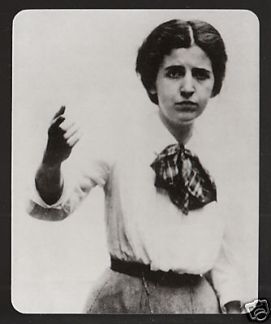
Almost immediately the IWW was involved in strikes but in its initial years it was the “Free Speech Fights” it waged, that gained the Union a reputation. These involved militant campaigns over the right to organise workers and quickly this fighting union attracted radicals including members of the Irish Socialist Club. By 1907 the Gurley-Flynn’s youngest daughter Elizabeth, then only 17, was a full-time organiser for the I.W.W. This began as we shall see a lifetime of activism for Flynn who would be arrested and imprisoned on numerous occasions.


For the likes of Flynn rather than rejecting what it meant to be Irish-American they saw their work in IWW and the struggle for Socialism as continuing Irish traditions. She constantly kept in contact with Irish Americans and took an active interest in politics in Ireland, a cause she very much identified with. People like the Flynn’s saw the Irish struggle for independence as synonymous with the struggle for workers rights in the US.


This thread in Irish American culture is long forgotten, however her father was not alone when he could lament as very much a proud Irish American (who was even briefly a member of the Ancient Order of Hibernians) that Irish people came to America and “soon become foremen, straw bosses, policemen and politicans and forget the Irish traditions for the struggle for Freedom” .


IWW and Anti Racism:
John Joe McKelvey and Local 8 Philadelphia


One of the major obstacles the IWW saw to achieving their goal of united work class action was racism and ethnic tensions within the American working class. Racial tensions had often been used to divide workers. Irish American workers often saw themselves as better than African Americans and racial tensions were used by employers to stunt unionisation attempts. The memory of the racist draft riots in New York in 1863 when Irish-Americans had been to the fore of lynch mobs attacking Black African Americans reminded people how devisive and explosive these tensions could be.


The IWW, in order to overcome this were explicitly anti racist in an era when many unions were explicitly racist. It was in Philadelphia, one of largest ports in the eastern US in the early 20th century, that the IWW made the greatest ground in combating racism, uniting African American, Eastern Europeans and Irish-American dock workers in the famous I.W.W. Branch “Local 8″.


A key component was the Irish American IWW organiser John Joe McKelvey5, who had organised a free speech fight in Spokane in 1909 with Elizabeth Gurley-Flynn. His presence and influence helped overcome the racism that had been prevalent among Irish Americans workers against African Americans. McKelvey’s work along side the work of African American IWW Longshoreman Ben Fletcher reaped huge dividends as the IWW effectively controlled the Philadelphia docks between 1913 -1923 despite constant attempts by other trade unions to subvert their work. The cost of organising for a different vision of America was immense however, John Joe McKelvey was beaten unconscious by the police and held without charge during a strike in 1913.


It was through struggles like these that the radical Irish Americans moulded a new identity where being working class Irish American also meant acknowledging the links and common interest they had with other working class communities. The IWW brought together the often segregated communities under a struggle for a better life, having similar successes amongst Lumber workers in Louisiana. This work did not go unnoticed and W. E. B Du Bois the early civil right activist noted in 1919 “We respect it [I.W.W] as one of the social and political movements that draws no colour [sic] lines”6.

The Irish Cultural Influence in the IWW


In these struggles music was a key organising tool of the IWW. With its numerous song writers most famously Ralph Chapman, who famously penned the lyrics of the song “Solidarity Forever”, and Joe Hill they translated their views of the world into easily understood songs. Several Irish Americans who joined the IWW contributed their Irish musical influence on these songs. Many of the songwriters are now lost but there are a few whose details still survive.


The most famous Irish American IWW songwriter was “Dublin Dan” Liston who lived in Butte, Montana. Born in Dublin, Liston ended up in owning a bar where several IWW figures drank. He penned the words of “Dan McGann” and the “Portland Revolution”. In the lyrics of Dan Mc Gann Liston challenged prejudices amongst the Irish-American community.


“….You howl and kick about the Bolshevik

the anarchist and the wob.

you defend this rotten system when

you don’t even own your job

Immigration laws would be “jake” with you

If they kept out the Russian Finn

The German Jew and the Frenchman too,

And Just let the Irish in.

You’re full of religion bunk a

and the priest on your life has a lease

Youre not even blest, like some of the rest

With the sense that God Gave Geese

You’re a rank disgrace to the human race

You’re one of those grand mistakes

Who came from the land, from which I understand, St Patrick drove the snakes”

When Liston died in 1942 his obituary in the newspaper of the IWW “The Industrial Worker” read “ He should be remembered for his gift of popularising some of the obscure phrases of his Dublin childhood and giving them world wide currency.” Liston was not the only such songwriter, G.G. Allen who almost nothing is known about, other than his songs, was either Irish-American or heavily influenced by Irish culture, evident in his song “Along the Industrial Road To Freedom” which was set to the music of “The Rocky Road to Dublin”. Another was a Pat Brennen [sic] who wrote a song called the “Harvest War Song” which he set to the tune of “Tipperary”.

Patrick Quinlan and the IWW Paterson strike

As the IWW grew in stature in the 1910′s, it continued to gain more and more members including many Irish Americans. In 1912 the IWW gained one its greatest organisers when the one of the founders of the Irish Socialist Club, Patrick Quinlan, joined. Born in Limerick in 1883 he emigrated to the US in the early 20th century. When he joined in 1912 the IWW scored one of its greatest victories perhaps one of the issues that attracted Quinlan.


Gurley Flynn adressing Strikers at Paterson.

That year saw Elizabeth Gurley-Flynn (now a household name) and Big Bill Haywood organise a successful strike of 20,000 workers in the textile mills in Lawrence, Massachusetts. This victory known as “The Bread and Roses Strike” ensured 1913 would be a year of great conflict between factory owners in the US and the I.W.W. 1913 went on to produce one of the bitterest strikes in US history when the I.W.W. took on the Silk Factory Owners in Paterson, New Jersey. It was here Patrick Quinlan made his name. The strike began on January 27th when the Doherty silk factory fired 4 members of a workers organising committee. In response 800 workers walked off the job in protest. Three Weeks later several thousand workers left other factories to attend a protest meeting addressed by IWW speakers who had been asked to attend. Patrick Quinlan joined Elizabeth Gurley Flynn, Carlo Tresca (an Italian Anarchist), Aldoph Lessig and Big Bill Haywood on the Platform.


Within a week these IWW organisers had given 25,000 silk workers the confidence to strike and effectively closed down the Silk industry in Paterson. The Strike would last several months through which the IWW organised kitchens, schools and much of everyday life in Paterson supported by donations from IWW organisations across the country.


Quinlan is on the left beside, Carlo Tresca, E Gurley Flynn, Adolph Lessig and Big Bill haywood


It was Quinlan who would become the famed leader of this strike, when in May he allegedly told several thousand strikers that they would win the strike even if it meant “wiping Paterson of the map”. Quinlan was charged with inciting the strikers to riot and after a prolonged court case he was imprisoned. In response a large amnesty campaign was organised and he was released two years later. In the meantime the strike did not fare well. The IWW hired Madison Square Gardens to stage a pageant to illustrate the case at Paterson to New York workers however they did not make the funds they hoped.

By late July 1913 the strike was broken due to a lack of funds and internal divisions. Patrick Quinlan would go on to be involved in progressive politics in the US for years being an early visitor to the Soviet Union after the Russian Revolution of 1917.


The arrival “Big Jim” Larkin and Repression


James Larkin

The following year, 1914, saw the arrival of another influential immigrant from Ireland who would shape the IWW. Arriving in Spring unannounced he went to the Gurley – Flynn household in the Bronx, knocking on the door saying “I’m Jim Larkin, James Connolly sent me”. James“Big Jim” Larkin along with James Connolly who had since returned to Ireland, had organised 20,000 workers in one the largest and longest strikes in Dublin – The famed lock out of 1913.

Defeated in early 1914, the Dublin workers were forced back to work in utter defeat. Disillusioned Larkin arrived in New York and through his contact with the Gurley-Flynns joined the IWW.


In the following years, IWW activities were dominated by war, increasing repression, strikes and Larkin was at the heart of these struggle. 1915 saw perhaps one of the most famous trials of IWW history when the well known IWW member and singer, Joe Hill was convicted of murder and sentenced to death. Innocent of the charges, the I.W.W. launched a campaign to have Hill’s decision overturned which gained worldwide support. The campaign ultimately failed and Hill was executed in 1915 by firing squad. The sad honour of delivery the oration fell to James Larkin and Big Bill Haywood who spoke to a crowd an estimated crowd of 30,000 people in Chicago11. The execution of Joe Hill ushered in a period of increasing repression against the left in America, and soon Irish-Americans were paying a heavy price for their left wing convictions


The case of Thomas Mooney


A few months after Joe Hill was executed another case of a false conviction this time involving the Irish American Thomas Mooney began. In July 1916 a bomb was thrown at a “Preparedness demonstration” which was essentially a pro war demonstration. Tom Mooney, the son of Irish emigrants, was blamed. Mooney had been politicised on a trip to


Thomas Mooney

Europe when he visited many countries including Ireland. His experiences and exposure to European Labour politics politicised him and on his return to the USA he joined the IWW before joining the Socialist Party of America.


By 1916 Mooney, a known radical having organised strikes and demonstrations, was arrested along with his wife and three others. At the end of highly tense trial his wife, Rena, and two others Israel Weinberg and Edward Nolan were acquitted but Thomas Mooney and Warren Billing were convicted. In what seemed to be a repeat of Joe Hills case the two were sentenced to death. This caused outrage as strong evidence indicated Mooney’s innocence. A large campaign was mounted to free Mooney and by 1920/1 incontrovertible evidence pointed to the fact he was innocent. Mooney however had the misfortune of being tried and convicted in the run up to what became known as “the First Red Scare” a period of repression that reached a cresendo between 1919-1920. This meant he would remain in prison for another 20 years before he was finally released receiving a full pardon in 1939.


The Red Scare


As early as 1917 tensions were reaching fever pitch in the US after IWW had organised against US involvement in World War I. This had seen the entire leadership of local 8 on the Philidelphia docks removed on federal authority in an effort to stop them organising against military shipments to Europe.


That year also saw two revolutions in Russia. The first an uprising of workers and soldiers was universally lauded and celebrated by the left. Events changed in October 1917 when Lenin’s Bolshevik party effectively staged a coup d’etat. This would permanently divide the left and eventually be one of the factors that saw the IWW split in two. However in the short-term, these revolutions in Russia illustrated further the potential threat the IWW and the various Socialist parties posed to the US State. This fear worsened when the US Communist party founded by several Boshevik sympathisers including James Larkin amongst others in 1919.

Repression reached unprecedented heights and was ironically dubbed “The First Red Scare”. This “scare” was in reality the brutal suppression of the American left. James Larkin then editing a newspaper he had founded with Patrick Quinlan, called the Irish Worker in New York was arrested on the bizarre charge of “Criminal Anarchy”. Convicted, he was sent to Sing Sing Prison for five to ten years. Although Larkin would secure release in 1923 only to be deported but other Irish Americans were not so lucky as Thomas Mooney could testify.


Irish American Radicals and Irish Independence.


While World War I had precipitated the crisis in Russia and its ramifications were felt around the world, events in Ireland were beginning to change rapidly too. The outbreak of the Irish War of Independence in 1919 excited almost all Irish American radicals who obviously kept a keen eye on the struggle for Irish Independence. However their hopes were very different to the reality in Ireland.


In Ireland in the aftermath of the 1916 rebellion and then subsequent threats by the British government to introduce conscription, the ranks of the Republican movement had swelled both politically in terms of Sinn Féin and militarily in terms of the IRA. Through 1918 the struggle for Irish independence intensified with the war of independence breaking out in 1919. This period saw increased contact from Irish Republicans with radicals in the US. The relationship between radical Irish Americans and Irish republicans was very mixed as the very differnt attitudes of two Republicans Liam Mellows and Eamon De Valera illustrates.


Liam Mellows


Liam Mellows was the only Irish Republican leader to the command a significant uprising outside Dublin in 1916. Although he was able to muster several hundred people in East Galway Mellows was forced to disband the unit when faced with superior forces. In the aftermath Mellows, a wanted man, fled to the US but was quickly arrested and imprisoned in “The Tombs” prison on suspicion of aiding Germany in World War I.


While he was in prison Elizabeth Gurley-Flynn and Carlo Tresca, who were now partners, were arrested and held in the The Tombs. Although they would not meet in prison Gurley-Flynn later met Mellows on his release in 1918. When she mentioned to Mellows that they had both shared time in “The tombs”, an associate of Mellows shocked that a woman would be imprisoned asked “And What were you in Jail for”. Mellows being more understanding of the ongoing struggle in US than many Irish Republicans interjected “Don’t you know there’s a struggle for peace and freedom here too”. Mellow’s sympathetic opinions were in the minority among Irish Republicans who came to American and this was particularly evident with the arrival of Eamonn De Valera in June 1919.


The Stature of De Valera, who was smuggled into the US, was immense given he was the sole surviving 1916 signatory. A narrow nationalist, De Valera had little time for radical Irish-Americans in general. When approached to put up bail money for the release of James Larkin then awaiting his trial during the red scare, De Valera would only give the money in secret as he feared alienating Irish American businessmen.


Decline of The I.W.W.

As De Valera and Mellows left America and returned to Ireland in 1920, the American left had already reached its zenith. The influence and power of the IWW was losing ground to overtly political organisations like the Communist party and the various Socialist party’s. As many Irish Amercians drifted towards these organisations their influence dwindled considerably. The movement that had proved so strong in the strikes 10 years previously, started to fragment and decline in both numbers and power. The IWW was the first victim, first torn apart by attitudes towards the Soviet Union and then debates about internal organisation it eventually split in 1924.


The early 20′s also saw any hopes they had that the emerging republic in Ireland would fulfil their hopes of a better world dashed. The news of the execution of Liam Mellows in Mountjoy Gaol by the newly formed Irish Free State in 1922 during the civil war was particularly poignant for Gurley Flynn and brought home in brutal and shocking terms that the new Irish state was not necessarily going to be the Republic either she had hoped for.


The outcome was not what Irish-American or Irish radicals for that matter had hoped for. In 1955 Gurley Flynn refelcting on Ireland, three decades after independence wrote:


“The situation in Ireland then and since then has not measured up to the expectations of the Irish people in Ireland and their kinsfolk around the world. The population of this strangely sterile country has fallen in the past three decades. Its development industrially and rurally has been retarded by its isolation from progressive countries. Censorship has stifled its press and literature. Creative mental life is limited, causing its best sons, like Sean O Casey to seek refuge in self imposed exile. Large number so of the younger generation have gone away to live in England and elsewhere. A dour and puritanical state in the image of the fanatically catholic professor of Mathematics, De Valera, has curtailed human freedom and attempted to the crush the joy of life. Equal life for women guaranteed by the earlier proclamations of Connolly were stricken from the 1937 constitution, causing Mrs Skeffington to Campaign in protest. James Connolly would have scornfully repudiated Devalera’s friendship with Franco and his act in sending official condolences to Hitler. A free workers republic was Connolly’s ideal”


Conclusion

The early 20th century clearly illustrated that there is no such thing as THE Irish American experiences or even THE quintessential Irish American. Class differences created often conflicting views of what America should be within the Irish American community perhaps best illustrated by the fact that Elizabeth Gurley Flynn was indicted by senator Joseph Mc Carthy another Irish American during the second red scare.


James Larkin highlighted it further when in Sing Sing prison. As he recalled the myth of St Patrick banishing snakes from Ireland he caustically followed it with the line “And Where did they go? They came to America to become politicians policemen detectives – and prison guards.” highlighting tensions over what it meant to be an Irish American.

All to often radicals among the Irish American community have been forgotten. Often dubbed as un-american they strenuously rejected this notion. They saw themselves as much Americans or Irish American as much as anyone else, they just held a very different view of what America should be. This was best highlighted at the Paterson Silk Strike of 1913 where they stood behind banners that read “we wove the flag, we dyed the flag, we live under the flag but we wont scab under the flag”.


Key Sources:

1.)Kornbluh, J.L. 2011 Rebel Voices An IWW Anthology Merlin 2011

2.)Gurley Flynn E. 1955 Rebel Girl An autobiography my first life Internaytional Publishers New York

3.)Cole, P.2007 Wobblies on the Waterfront: Interracial Unionism in Progressive-Era Philadelphia

4.)Doherty R.E. Thomas J Hagerty the church and socialism available here


Postscript:

Thomas J Hagerty mysteriously disappeared in 1905 never again assoicating with the IWW. He was tracked down in 1917 by IWW member Ralph Chapman, when he was living in Chicago under an assumed name Ricardo Moreno but never re-engaged in politics. Indeed he renounced the IWW when they sought his help in 1919.

Elizabeth Gurley-Flynn was active in politics all her life. She went on to join the American Communist party in 1936. She was died in 1964, on a visit to the Soviet Union where she was afforded to the State funeral.

Mary Harris “Mother” Jones died in 1930 after 50 years of continuous activism, she was buried with miners she had organised through out her life. She is commemorated today through the radical magazine named in her honour “Mother Jones”

James Larkin was freed from Sing Sing and deported from the US in 1923 arriving back to an Ireland gripped by civil war. He campaigned for an end to the conflict and then devoted much of the 1920′s to communism in Ireland. He rejoined the Labour Party in 1941, a party he had founded in 1912. He died in 1947.


Liam Mellows did not live long after he left the US. He opposed the treaty in 1922 and fought on the Anti Treaty side. He was one of 4 people executed in reprisal for the IRA execution of the TD Sean Hales. He was 27.


Patrick Quinlan visited the Soviet Union in the early 20′s but judging from this Letter in the New York times he was critical. He died in 1948.


John Joe McKelvey’s later life is not well recorded, if anyone knows anything more about him I would appreciate any information.


William “Big Bill” Haywood fled the US in 1921 during the red scare to live as an unhappy exile in the Soviet Union, dying in 1928.


Carlo Tresca, Elizabeth Gurley-Flynn’s partner was active in Anarchist and Labour politics in the US for two decades focusing much energy on anti-fascism and attempts to stop the mafia infiltrating Unions. He was also a vociferous opponent of the Soviet Union. He was assassinated in 1943 at the hands of Fascists, the mafia or possibly the NKVD.


The IWW still exists today organising workers across the world. It is only a shadow of its former self when in the early 1920′s it claimed 100,000 members. www.iww.org


SOURCE :


Sunday, January 01, 2012

RADIO REBEL GAEL Presents :
New Years Feile !


FEAT. Exclusive Interviews w/ Mick O’Brien of THE DRUIDS(Kildare), Ray Kelly  of THE MICKEY FINNS (New York), Eoin McCarthy of WHISKEY OF THE DAMNED (Milwaukee), and Dan Larkin of THE LARKIN & MORAN BROTHERS (Chicago) !

 http://spinxpress.com/bronxgael/
As well as lots of classics, and new tunes by Dougie Breslin (formerly w/PANGUR BAN),  Damien Dempsey, Derek Warfield, Paddy McHugh & The Goldminers, Neck, Wolfhound, Kevin Flynn & The Avondale Ramblers, Claymore, Shebeen, Blood or Whiskey, The Pogues, The Irish Brigade, The Go Set, The Wakes, The Langer’s Ball, The Killigans, The Mickey Finns, The Prodigals, The Rumjacks, Dancin’ Knuckles, Siobhan, Roaring Jack, Bible Code Sundays,

http://www.archive.org/details/RRGNewYearsFeile/


And tons more !
http://spinxpress.com/bronxgael/

Monday, December 19, 2011

Holiday Update :

 
Breaking News :

The United Working Elves Union of the North Pole, (local#42) have called a strike against Santa Claus & Claus Inc., citing sweat shop labor ethics of the Claus & Claus Inc., unpaid wages, cuts on Health benefits, and an abusive drunken supervisor bedecked in jolly red suit and white beard, who is often absent or sleeping off a hangover in the janitors closet.....Additionally,word on the street is that Santa Claus has absconded with the Tooth Fairy.....Rudolph and his Rednose reindeer were not available for comment.

I'll keep you posted on all developments.....


Monday, December 12, 2011

RADIO REBEL GAEL Presents :
Santa Gone Fenian !


  http://spinxpress.com/bronxgael/


FEAT. Exclusive Interviews w/ CIARAN MURPHY, and Mike Walker of THE McGILLICUDDYS !
    http://spinxpress.com/bronxgael/


As well as lots of Fenian classics, and new tunes by Aine Fox, Athenrye, Martin Whelan, The Larkin and Moran Brothers, The Kreellers, The Fisticuffs, Kilmaine Saints, Dropkick Murphys, Siobhan, Blood or Whiskey, Cruachan, Kelly’s Men, The Dubliners, The Wolfe Tones, The Gentlemen, Shane MacGowan, The Wakes,


And tons more !


http://www.archive.org/details/RRGSantaGoneFenian/

Tuesday, December 06, 2011

IN REMEMBRANCE OF VOLUNTEERS WILLIAM FLEMING & DANNY DOHERTY

 William James Paul Fleming and Danny Doherty were volunteers in the Derry Brigade of the Provisional Irish Republican Army from the predominantly republican "Top Of The Hill" area of the Waterside, Derry, Northern Ireland.

Willy Fleming and Danny Doherty were killed in a pre-meditated British ambush in the grounds of Gransha Hospital by the SAS and 14 Intelligence Company soldiers of the British Army on 6 December 1984.

 On 6 December 1984, Fleming and Doherty were driving a motorbike into the grounds of Gransha Psychiatric Hospital, approximately 4 miles from Derry City Centre. The hospital was also the administrative headquarters of the Western Health and Social Services Board. It was reported at the time that the pair were at the hospital in an attempt to execute an off-duty member of the Ulster Defence Regiment who worked at the hospital as there was a shift change at the hospital at 8am.The SAS unit were aware that an IRA operation had been planned to take place in the vicinity of the hospital after receiving a tip-off. An SAS unit from the "Londonderry Detachment of 14 Intelligence Company", without the knowledge of the RUC or the hospital authorities, were on duty at the hospital for two weeks prior to 6 December, however they had little prior information as to the details of the operation.

At 8 am an unmarked car driven by a member of the SAS rammed into the motorbike, dislodging Fleming from the pillion seat and causing it to go out of control. After Fleming had been knocked from the motorbike, two further SAS troopers shot him, claiming he was armed and posed a direct threat. The bike then mounted a kerb and threw Doherty to the ground. Forensic evidence showed that a further six shots hit Doherty while he was on the ground, and Fleming's autopsy showed that he had four gunshot wounds to his head and 56 to his trunk and torso. During the inquest into the shootings, the coroner stated that Vol. Danny Doherty had three gunshot wounds to the head and a further twenty one shots to his body. Proof of not an arrest, but a deliberate murder by the forces of the crown, simply because Volunteers Danny Doherty & William Fleming posed a threat to the forces of British occupation due to their uncompromising dedication to the Republican cause and the goal of a 32 County Socialist Republic.


 Volunteers Danny Doherty & William Fleming, unbowed and unbroken, they lived and died as Republicans and Irishmen. Remember them with pride.

 Beidh Ar La Linn.


Saturday, December 03, 2011

In Remembrance of One of Ireland's Finest Sons, Volunteer Antoine MacGiolla (Tony McBride)

29 August 1957 – 2 December 1984


R.I.P. Vol. Antoine MacGiolla, Tony McBride, one of Ireland's finest sons, Mac Giolla Bhrighde , a volunteer in the South Derry Brigade of the IRA.

Volunteer Mac Giolla Bhrighde served in the regular Irish Army between February 1975 and June 1979. In 1979, while on leave from the Irish Army and secretly holding dual membership of the IRA and the Irish Army, Mac Giolla Bhrighde was stopped by Royal Ulster Constabulary (RUC) officers near Magherafelt while in possession of a rifle. He was detained at Strabane RUC barracks and was later imprisoned for three years for this operation.


Mac Giolla Bhrighde, according to IRA sources quoted by journalist
Ed Moloney was noted for his hard line militarist republicanism. He is reputed to have backed a plan to form full time guerrilla units or "flying columns" based in the Republic, which would carry out four or five large-scale attacks in the north a year.

This approach was espoused by the militant Provisional IRA East Tyrone Brigade led by Padraig McKearney and Jim Lynagh, who wanted an escalation of the conflict to what they termed "total war". They were opposed by Kevin McKenna, the IRA Chief of Staff and by the republican leadership based around Gerry Adams, on the grounds that actions of that scale were too big a risk and unsustainable. The IRA leadership wanted a smaller scale campaign of attrition, supplemented by political campaigning by Sinn Féin.

After his release from prison Mac Giolla Bhrighde, who had made a number of friends and contacts in Norway, became involved in providing information for the Irish republican cause throughout Scandinavia. After returning from Norway in November 1984, Mac Giolla Bhrighde along with fellow volunteer, Ciaran Fleming, undertook their final operation.

In the early hours of Sunday morning on 2 December 1984, in cold sleety conditions, Mac Giolla Bhrighde and Fleming stole a Toyota van in Pettigo, County Donegal. The van was then loaded with 9 beer kegs, each containing 100 lbs of low explosives. They then crossed the border and travelled to Kesh, County Fermanagh. At the Drumrush Lodge Restaurant just outside of Kesh they planted a landmine in a lane leading to the restaurant and wired up a device which was connected to an
observation point. From there a hoax call was made in order to lure the British Army to the restaurant on the pretence that there was a firebomb planted within the restaurant.

Mac Giolla Bhrighde observed an RUC patrol car approaching the restaurant and gave the detonation code word "one", however, the mine failed to explode. There was another car parked in the car park which Mac Giolla Bhrighde believed to contain civilians, and he got out of the van from which he was observing the scene to warn the civilian car to leave the area.

According to the republican sources, when he approached the car, two Special Air Service (SAS) soldiers got out and commanded him to halt and drop his gun. Mac Giolla Bhrighde, who was unarmed, informed the SAS of this and then one of the SAS men stepped forward and shot him on his left side. He was then handcuffed and shot dead.

RIP Vol. Mac Giolla ! Beidh Ar La Linn !


Wednesday, November 30, 2011

RADIO REBEL GAEL Presents : The Autumn Rebellion !


FEAT. Exclusive Interviews w/ Mike Mc Naughton of KILMAINE SAINTS (Pennsylvania), Kat Chish of  THE RAMSHACKLE ARMY (Melbourne), and French Folk musician, Steph Hoy (Paris, France)


As well as lots of Fenian classics, and new tunes by Padraig Mor, Pol MacAdaim, Ciaran Murphy, Derek Warfield, Mary Black, Larkin, Skerryvore, The Druids, The Rebel Hearts, The Fisticuffs, The Currency, The Prodigals, The Wolfe Tones, Eire Og, Sharky Doyles, Catgut Mary, Neck, Scary Eire, The Dreadnoughts, The Dubliners, The Tossers, The Vandon Arms, Mutiny, The Go Set, Mutiny, McAlpine’s Fusiliers, Roaring Jack, General Humbert,


And tons more !

http://www.archive.org/details/RadioRebelGaelAutumnRebellion_/

Wednesday, November 23, 2011

Remember The Manchester Martyrs, November 23, 1867


The Manchester Martyrs are hanged in Manchester, England on Nov. 23rd, 1867, for killing a police officer while freeing two Irish Fenians from police custody.

These men were :

William O'Mera Allen, Michael Larkin and William Goold O'Brien


In the early hours of the Eleventh of September, 1867, Colonel Thomas Kelly and Captain Timothy Deasy were arrested in the centre of Manchester on a vagrancy charge. News of their arrest was immediately sent to Mr. Disraeli, the Prime Minister, as Colonel Kelly was the most prominent Fenian of them all, having only recently been confirmed as Chief Executive of the Irish Republican Brotherhood and as such was considered quite a capture.

On the Eighteenth of September, the two prisoners were conveyed from the Court House in Manchester to the County Jail on Hyde Road, West Gorton. The two Fenians were handcuffed and locked in two separate compartments inside the Police van, there was a posse of twelve mounted policemen to escort them.

On the journey, as the van passed under a railway arch, a man darted into the middle of the road, pointed a pistol at the driver and called on him to stop. At the same time, a party of about thirty men leapt over a wall at the side of the road and surrounded the van and seized the horses, one of which they shot. The police being unharmed offered little resistance, and were soon put to flight.

The rescuers after a vain attempt to burst open the van with hatchets, sledge hammers and crowbars, called upon Police Sergeant Brett, who was inside the van with the prisoners, to open the door. Sergeant Brett refused, thereupon one of the rescuers placed his revolver at the keyhole of the van and fired, at that moment Sergeant Brett had put his eye to the keyhole to see what was going on outside, the bullet passed through his eye into his brain and killed him. The door was opened from the inside and Cplonel Kelly and Captain Deasy escaped, never to be recaptured.

Other casualties were a police officer shot in the thigh, and a civilian shot in the foot. After a chase, the police made 29 arrests, including, they claimed, the three men who had fired the revolvers. By November, five of the men arrested for taking part in the rescue; William O'Mera Allen, Michael Larking; William Goold alias O'Brien, Thomas Maguire and Edward Stone, were found guilty and sentenced to death. Maguire was pardoned and discharged, Stone's sentence was commuted on the eve before the day fixed for his execution.

Allen, Larkin and O'Brien were publicly hanged on the Twenty Third of November, 1867.

A Memorial was erected to their memory in Moston Cemetary


Sunday, November 06, 2011

RADIO REBEL GAEL Presents :
 The November Uprising !


FEAT. Exclusive Interviews w/Kieran of GLASNEVIN (Glasgow), Johnny McKelvey of THE RUMJACKS (Sydney), and Paul Bruno of THE KREELLERS (Detroit) !
 
New and Old Tunes by Derek Warfield,  Matt McGinn, Mike Fox,  Chicago Reel,  The Irish Brigade, The Groggers, Roaring Jack, Wolfhound


Monday, October 31, 2011

Radio Rebel Gael Presents : The Samhain Sing Song !

It's a Halloween Hooley !

 http://spinxpress.com/bronxgael

FEAT. Exclusive Interviews w/ CIARAN MURPHY, Damaris Woods of THE YOUNG WOLFE TONES , and Keith Fay of CRUACHAN !!!

http://spinxpress.com/bronxgael
And Over Three Hours of New and Old Tunes by The Druids, The Prodigals, Bluestack, Athenrye, Auld Corn Brigade, The Popes, Neck, Dropkick Murphys


And tons more !


“If I was you I’d give that game up; it doesn’t pay a working-man to write poetry. I don’t profess to know much about poetry……I don’t know much about the pearly glint of the morning dew, or the damask sweetness of the rare wild rose, or the subtle greenness of the serpent’s eye --- but I think a poet’s claim to greatness depends upon his power to put passion in the common people.”


                        -- Sean O’Casey,  “The Shadow Of A Gunman”


http://spinxpress.com/bronxgael


Thursday, October 13, 2011

How Gary White Deer of Ada found himself on the Emerald Isle

Gary White Dear stands at the Irish Famine Memorial garden in New York. The artist, teacher and medicine man always wondered: What does being a Choctaw mean in an age when it seems anyone with a drop of tribal blood could declare themselves Indian? In the end, he found answers, but not on the reservations or anywhere he might have expected. He found them in Ireland.

   
   By HELEN O'NEILL, AP Special Correspondent, Tulsa World


Gary White Deer has spent a lifetime wrestling with his identity, his history, his sense of belonging.
Artist, teacher, medicine man, he has roamed the country — visiting elders, soaking up old stories and songs. He married a Kiowa woman whose family practiced traditional ways. He formed a native dance troupe, prayed at the sacred mound of Nanih Waiya in Mississippi, immersed himself in historic preservation groups, taught tribal history.


Still, he has always wondered: What does being a Choctaw mean in an age when it seems anyone with a drop of tribal blood could declare themselves Indian?

In the end, he found answers, but not on the reservations or anywhere he might have expected.

He found them in Ireland.

He found them in the parallel tales of history — of colonization and dispossession and poverty. And in the Irish love of the land and celebration of ancient places — like the Hill of Tara, ancient mythological seat of the High Kings, and Newgrange, a 5,000-year-old passage tomb carved with Celtic symbols that resembled some Choctaw signs. Even in the way the Irish struggled to preserve their native language, teaching it in schools, using it on road signs and documents, preserving rural Irish speaking areas called the Gaeltacht.

What if, he wondered, the Choctaw had managed to do the same?
___


At 59, White Deer is a genial, gifted artist whose life, until the early 1990s, had largely revolved around his paintings (boldly colored portraits of Choctaw in traditional dress), raising a family of seven, and cultural studies.

He knew little about Ireland other than "they threw a big party for St. Patrick every year." And then he met a group of Irish hikers at a tribal resort in Mississippi. He was working on an art commission. They had come to walk the historic "Trail of Tears," to worship at Nanih Waiya, and to offer a donation of $20,000 to the Choctaw nation.

White Deer was stunned. His own people commemorated the trail, but not like this, not with this determination to learn from the past and act on it.

The Irish-Indian connection, he would learn, dated back more than a century, to a nearly forgotten tale that unfolded in 1847.
"Black '47," the Irish named it, one of the worst years of the famine, which began with the failure of the potato crop in 1845 and lasted through the 1850s. More than a million people died of disease and starvation during An Gorta Mor — The Great Hunger — and another million fled on "coffin ships" to America.

A world away another sorrowing people heard their cries. Under President Andrew Jackson's Indian removal policy, the Choctaw had been displaced from their homeland in Mississippi just a decade earlier and forced to march 600 miles to Oklahoma, thousands dying along the way. With memories of the Trail of Tears still fresh, they collected $170 — today's equivalent of about $8,000 — and sent it to the starving people across the sea.

The Choctaw donation was largely forgotten until the 1990s when Irish researchers discovered references to it and other small donations from around the world during preparations for the 150th anniversary of the famine. Today, White Deer says the tribe's extraordinary act was "like an arrow shot through time."

On both sides of the Atlantic, the story has changed lives, prompted donations to other starving nations, spurred Irish presidential visits and forged deep bonds between the Choctaw and the Irish.

Perhaps no one's life has changed more than that of Gary White Deer. And it began the day he met the Irish hikers in Mississippi.


Leading the group was a man named Don Mullan, a human rights activist, who had worked with nonprofit organizations fighting hunger around the world. At 53, Mullan brims with ideas, big ones, about combatting hunger and poverty and injustice — and about the power of history and symbolism to do so. And he gets things done. He counts Archbishop Desmond Tutu, Sister Helen Prejean and Pele as friends.

White Deer found himself immediately drawn to Mullan and his mission. But it was the Irishman's personal story that impressed White Deer the most.

Mullan, who grew up in a working-class Catholic housing estate in Derry, Northern Ireland, was among the unarmed civil rights marchers fired on by British paratroopers on Jan. 30, 1972. Thirteen young men were killed on "Bloody Sunday" and the rage and pain that engulfed the province became a potent recruiting tool for the Irish Republican Army.

Mullan was 15 at the time. And yet he had turned away from violence, rather than embracing it like so many of his peers.

White Deer was impressed by Mullan's tireless energy, by his faith that nonviolent activism can effect real change. "Don has this genius for how the lessons of the past can be used to achieve real change in the present," White Deer says.

Mullan sensed a similar feeling in White Deer — in his drawings depicting the Trail of Tears, in his study of old tribal ways. He asked White Deer if he could use one painting — of a Choctaw mother and child in blowing snow — as an international symbol to fight world hunger.

The two men kept in touch. And in 1995, Mullan invited White Deer to join him on an annual 12-mile walk in County Mayo. Ireland's own "trail of tears" retraces the trek of hundreds of starving poor in a futile effort to beg the British authorities for help.


Mullan was well aware of the symbolism. Newspapers and television stations carried dramatic photographs of the reverential Choctaw, festooned in feathers and beads, bowing in prayer along the trail.

For his part, White Deer understood his role. But he was unprepared to feel so moved. In the desolate beauty of the rocky Mayo hills that seemed to bleed into the Atlantic, he felt "as if the spirits of the famine dead were walking alongside me."


White Deer began visiting Ireland almost every year, invited back by art groups, human rights organizations and environmentalists — anyone who felt the amiable Choctaw with his beads and his blessings could help them with their cause.

Irish people warmed to White Deer with his self-deprecating humor and quick ear. He picked up accents and expressions — "a soft day," ''a wee sec."


He visited schools and museums and pubs, appeared on Irish television and in a documentary about the famine. He planted a "peace tree" in Carrickfergus, where Andrew Jackson's father was born. He sipped tea with the American ambassador and met with the former President Mary Robinson at her official residence in Dublin's Phoenix Park.

On one memorable occasion he stood before a class of rapt students in Dublin, solemnly teaching them about the old native ways.

Suddenly he burst into song: "Oro Se do Bheatha 'Bhaile..."

It's an old Irish rebel song and the teenagers were momentarily stunned. Then they cheered and clapped and sang along.

White Deer — stranger, showman and spiritual muse — had captivated an audience once again.
___

White Deer clearly enjoys his minor celebrity status. But he insists there are deeper, more spiritual motivations for his visits. "Ireland," he says, "made me see my own history more clearly."

Nowhere was that more true than in Derry, where he was invited to create an outdoor mural in 1998. Although peace talks were under way to end three decades of conflict, the province was still a place of barricades, tanks and guns. White Deer recalls wobbling on scaffolding as he struggled to paint an image of a Choctaw woman, in traditional dress, cradling an Irish baby. A military helicopter buzzed overhead. A riot brewed below.

"This isn't an art commission," he thought. "It's a war zone."

And yet he felt at home in the hilly streets of Derry. The city reminded him of the historic oppression of his own people, and of the scrutiny he still feels today in places where he knows he is unwelcome.

He learned to understand the historic divide between the unionists who support British rule and the nationalists who are opposed. It prodded him to think about the divide amongst his own people — between those who favor more assimilation into mainstream American culture and those, like White Deer, who dream of returning to a more traditional way of life.

Back home in Ada, Okla., White Deer began writing about those ways, and teaching them in his class at Bacone College in Muskogee. With his boss, Joe Bohannon, who chairs the division of American Indian studies at the college, he formed a group called the Choctaw Snake Band, invoking the name of a 1900s group that advocated independence. The band hopes to revive the Choctaw language, to one day form a separate Choctaw state.

White Deer speaks and writes passionately about the band's lofty goals. But he is realistic. He knows that many will dismiss them as the self-serving rantings of someone who likes attention. Still, he says, he has to try. Ireland taught him that.

He has taught his Irish friends some powerful lessons, too.

"Gary has a real feel for the two worlds, the spirits of the past and the living and bridging those two worlds," says Aisling Meath a 49-year-old journalist and researcher who befriended White Deer on one of his early visits. Meath lives in Skibbereen in County Cork, a picturesque coastal town in the southwest whose devastation during the famine is immortalized in a song called "Remember Skibbereen." A large grassy field marks the spot where an estimated 8,000 to 10,000 famine victims were buried — wheeled in carts by dying relatives and dumped in a mass grave.

The field is just a short walk from Meath's house. Yet for years, she couldn't bring herself to go there. It was somehow too disturbing.

She visited the field for the first time last year, with White Deer. And she marveled at the irony — that it took a Choctaw from Oklahoma to make her confront the reality of her own history, right outside her own door. "There is something almost spiritual about his empathy with the land, with people, with history," Meath says.


Another friend, Joe Murray, co-ordinator for a human rights organization called Action From Ireland, witnessed that same empathy when he introduced White Deer to a remote fishing village in County Mayo in 2005. The small community of Rossport had made international headlines in its fight against plans by Shell Oil and other companies to build a natural gas pipeline through the area and a refinery nearby.

Five fishermen had been jailed after ugly confrontations with police. And now an entire community had rallied in support.

White Deer was astounded by the crowd that spilled into the parish hall one evening. People had traveled from miles, not just fishermen, but farmers and schoolteachers and businessmen. Yet again, White Deer wondered: What if my own people could muster such passion for our cause?
He prayed with the people of Rossport. And he promised not to forget them.
Back home, White Deer threw himself into efforts to raise money for the Mississippi Choctaw who lost homes in Hurricane Katrina. But he tapped donors for another cause too. In 2007, White Deer returned to Rossport and presented the fishermen with $8,000 — the equivalent of the donation the Choctaw people made to the Irish 160 years earlier.
"It was such a lovely gesture," Murray says. "Like a continuation of history, and so meaningful."
For his part, White Deer calls it a small gesture from the heart. He is speaking not only of the Rossport donation, but the historical famine donation, too. "It was just one dispossessed people reaching out to help another," he says. "They probably would be surprised at being remembered today."
It has become kind of mantra for White Deer. He has said it many times before — in Dublin, in Derry, in Mayo, at the Irish consulate in New York a few weeks earlier where he was a guest of honor at an evening to commemorate the famine.

He repeats it now, on a recent hot evening, sitting in the Manhattan apartment of an Irish friend. The place is filled with photographs and mementoes from Ireland. The windows are open and the city hums outside. It all seems a world away from White Deer's home in Ada, his travels through Ireland and his dreams for the Choctaw.
But White Deer doesn't think so. He believe it is all connected, like beads on a cosmic chain, like the flow of life.
White Deer has just spent two days traipsing around the city with a filmmaker from Dublin, working on a documentary about the Choctaw-Irish connection. Among other places, they have visited the Irish hunger memorial garden in lower Manhattan, a quarter-acre grassy hill with the remnants of a famine-era stone cottage imported from Mayo. Etched into the stone base is a reference to the generous donation by "the Children of the Forest, our Red Brethern of the Choctaw nation."

White Deer chuckles. He had never heard his people called Children of the Forest before. But he understands the power of symbolism and of myth. Ireland taught him that.

It was such a small gesture, he says. And yet the effects ripple to this day, across cultures, across decades, across the ocean.
Like an arrow shot through time.

Monday, October 03, 2011

Radio Rebel Gael Back w/ a Bang and A Whistle !

RADIO REBEL GAEL Presents : Righteous Reels and Balladeers Bold !


 http://spinxpress.com/bronxgael/


FEAT. Exclusive Interviews w/ Blair McEvoy of DUST RHINOS and Paul Holohan of WHISKEY STILL (formerly w/ DUBLIN CITY RAMBLERS)

And New and Old Tunes by Davey Arthur and The Fureys, Damien Dempsey, Blood or Whiskey, Dancin’ Knuckles, The Buskers, The Rebel Hearts, Bible Code Sundays, The Battering Ram, The Fisticuffs, The Tossers, The Druids, The Wolfe Tones,


And tons more !


http://spinxpress.com/bronxgael/


I always carry gelignite; dynamite isn't safe.

Brendan Behan

Thursday, September 29, 2011


Ever-growing Banjo Burke Festival returns to the Catskills

By Toni Earls, The Irish Emigrant, Sept. 29th, 2011


... The late Joe "Banjo" Burke.


The Pride of Moyvane Céili Band.This year the “Irish Alps” celebrates the fifth annual Banjo Burke Festival, which will be held in East Durham, New York over Columbus Day Weekend, October 7-10. The gathering offers an opportunity to enjoy traditional Irish music, dance and hospitality amidst the beautiful fall foliage of Greene County’s Catskills.


The Banjo Burke Memorial Fund is a public charity founded to honor the memory of the late Joe “Banjo” Burke, a brilliant musician, singer and collector of songs who was also a well-known hurler in his native Kilkenny and at Gaelic Park.


The Fund helps to support Parkinson’s research, as well as Irish traditional arts and sports. The Banjo Burke Festival is the main event on the Fund’s schedule, and has grown into an amazing tribute to a man who was devoted to traditional music, song, and sport.

This year as always the festival will feature performances by gifted Irish musicians, singers, and dancers across the weekend. Various workshops will also be offered, giving aspiring and accomplished musicians alike a chance to study with the experts.


Bridget Burke, who was married to Joe for 22 years before he passed away in 2003, is one of the dynamos behind the festival and a member of the board of directors for the charity. She spoke with The Irish Emigrant, sharing her excitement about the upcoming weekend.


“Our festival is different, it’s not like some of the larger festivals,” Bridget said. “It’s small and intimate, with a great focus on traditional music.”


Those looking for a festival focused strictly on traditional music and song will find exactly that at the Banjo Burke Festival. The weekend will feature continuous performances at all participating local houses, offering fantastic traditional atmospheres whilst keeping all in attendance warm and dry.


“All of our events will take place indoors, so no one has to worry about the weather,” Bridget continued. “Our venues are smaller and more intimate - the festival is a grouping of smaller events in different houses, so there’s more of an ambiance, a closer interaction with the performers.”


Speaking of performers, those bringing their skills to the area over the weekend include [deep breath]: Brian Conway, John Nolan, Aine Meenaghan, John Whelan, Pauline Conneely, John Walsh, Rose Conway Flanagan, Joy Grimes, The Pride of Moyvane Céili Band (Margie Mulvihill, John Reynolds, Felix Dolan, Jimmy Kelly), Hearts Content (Tom Dunne, Linda Hickman, Iris Nevins), Ceol na gCroí Céilí Band (John Nolan, Linda Hickman, Brendan Fahey), Pat Kane, The Jameson Sisters, Lawson, and more. On top of this fabulous lineup, many surprise guests are also set to pop along, both on Saturday and Sunday.


“The workshops will also be small,” Bridget said, stressing the added value of such intimate gatherings for those eager to learn and improve. “Musicians will get far more attention from the teacher; it’s a wonderful opportunity for learning. Not only are there music workshops, there will be Céilí workshops, as well as set dancing.”

The organizers promise that even if attendees have only been onlookers to this point, know nothing about Céilí, or have tried it but still feel unsure of the steps, the classes will open up a whole new world to them.


Instructor Pat Kane is vastly experienced at teaching groups with mixed ability levels, and will pull in beginners whilst still challenging those with more experience. He has been dancing Céilí since the 1970s, and has been teaching Céilí at parties and festivals and as an artist in residence at schools in the Twin Tiers area of western New York and Pennsylvania for many years.

Ron Bruschi and Marie Newman will teach set dances, including pointers on footwork. This year’s festival will also feature conversational Irish classes, a new addition which will round out the Irish cultural experience perfectly.

If you would like to contribute to the legacy of the inimitable Joe “Banjo” Burke whilst learning more about Irish music, language, and tradition, head up to the Catskills this Columbus Day weekend and experience a different type of festival which mixes the best of performance, education and friendship.


For more information about the Banjo Burke Memorial Fund, festival registration, fees and the full festival schedule, visit JoeBanjoBurke.org.